How Computers Share Directly — and Why Amour.X Runs on a Peer-to-Peer Network
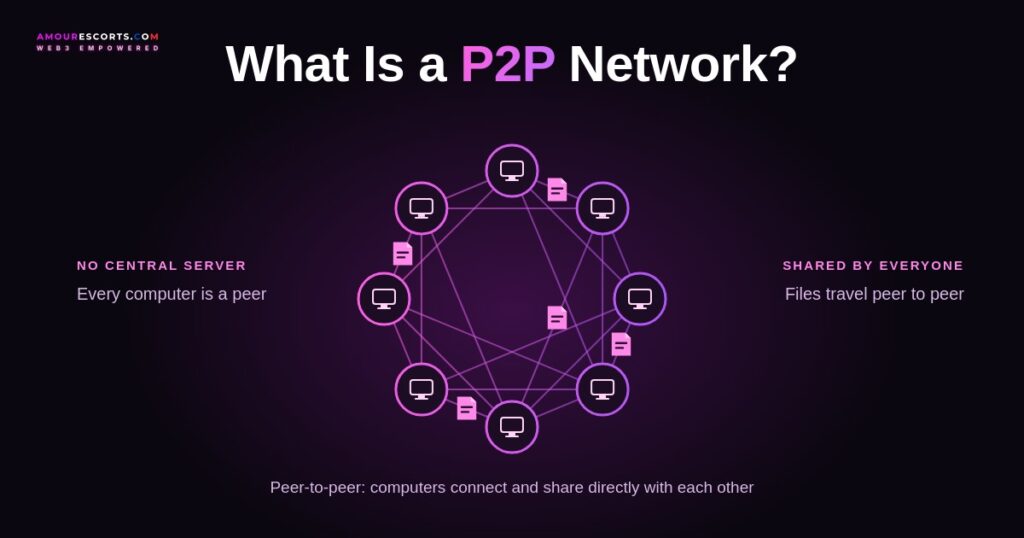
What is a P2P network? P2P stands for peer-to-peer: a network where computers connect and share files directly with each other, instead of everyone going through one central server. Each computer — each “peer” — can both receive and share at the same time.
You’ve probably used P2P technology without knowing it. This guide explains how it works, how it differs from the usual client-server model, where it’s used today, and why Amour.X runs on a peer-to-peer network.
What is a P2P network in simple terms?
Picture a library. In the usual setup, one central library holds every book, and everyone has to go there. If the library closes, nobody can read anything.
A P2P network works like a group of friends who each keep copies of the books. If you want one, you borrow it from whoever is closest. If one friend is away, someone else still has a copy. The more people join, the more copies there are and the faster sharing becomes.
Client-server vs. peer-to-peer
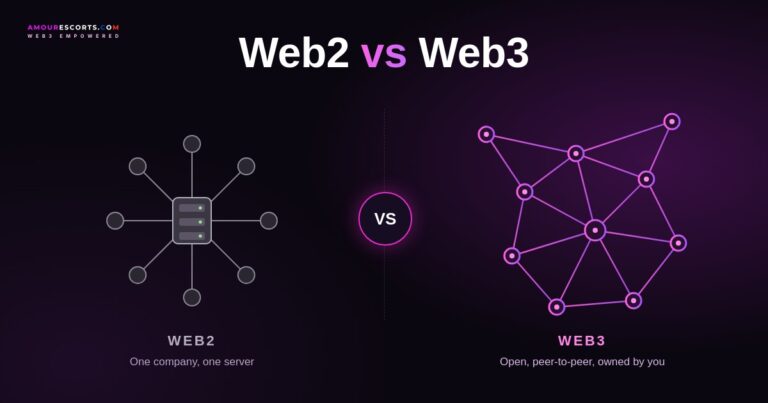
| Client-server | Peer-to-peer (P2P) | |
|---|---|---|
| Where files live | On one company’s servers | Copies on many computers |
| Who serves the content | The central server only | Any peer that has a copy |
| If one machine fails | The whole site can go down | Other peers keep it available |
| More users means | More load on the server | More peers sharing the load |
| Who controls it | The company that owns the server | No single owner |
How does a P2P network work?
When you join a P2P network, your computer finds other peers and asks them for the pieces it needs. Large files usually travel in small chunks, often from several peers at once, and your computer puts them back together. Once you have a piece, you can share it with others too.
Modern P2P networks such as IPFS find files by what they contain rather than where they’re stored. Each file gets a unique fingerprint built from its content. You ask the network for that fingerprint, any peer that has the file can send it, and your computer checks that the fingerprint matches — so you always get exactly the original.
Where P2P networks are used today
- File sharing: BitTorrent made P2P famous by letting millions of people share large files without a central host.
- Cryptocurrency: Bitcoin and other blockchains run on P2P networks, where thousands of computers keep the same record of transactions.
- Websites and storage: IPFS stores websites and files across many computers, so they don’t depend on one server.
- Calls and messaging: some calling and chat apps connect people directly to each other for speed and privacy.
For the technical background, see peer-to-peer on Wikipedia.
Advantages and drawbacks of a P2P network
Advantages
- No single point of failure: one computer going offline doesn’t take the content down.
- Harder to censor: no single company can simply delete what the network holds.
- Scales with its users: every new peer adds capacity instead of adding load.
- Verifiable content: content fingerprints prove that files haven’t been altered.
Drawbacks
- Not always instant: rarely shared files can take longer to find.
- Needs the right tools: some P2P sites open only in Web3 browsers such as Brave.
- Public by design: anything you publish to an open P2P network can be copied by any peer, so it’s meant for public content, not private data.
Why Amour.X runs on a P2P network
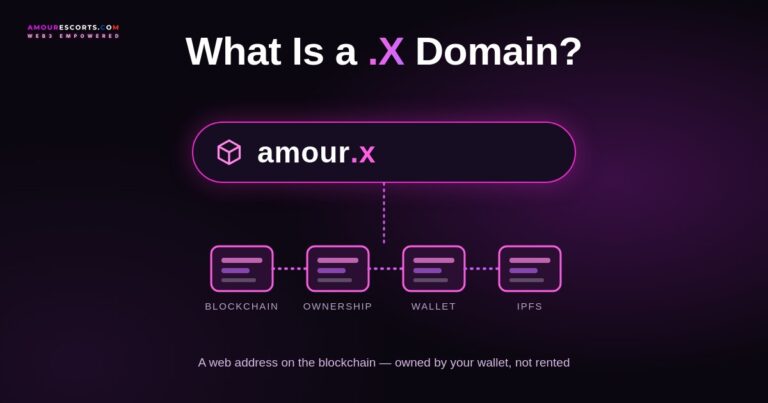
Amour.X, the Web3 home of Amour Escorts, is published to IPFS and reached through a blockchain .x domain. That gives profiles a home that doesn’t depend on a single server or host staying online.
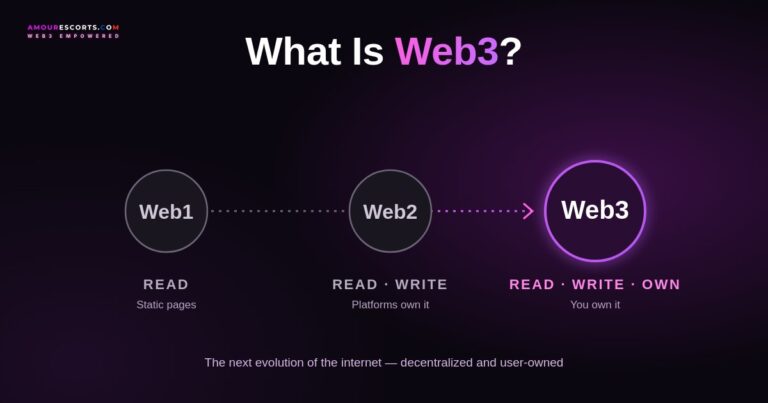
Profiles with the WEB3 VIP plan appear on Amour.X next to amourescorts.com. Amour.X stores no personal account data: it holds only the public profile content, published to the peer-to-peer network. To learn more about the bigger picture, read What is Web3? and Web2 vs Web3.
Frequently asked questions
What is a P2P network?
A peer-to-peer network is a group of computers that share files and data directly with each other, without relying on one central server.
Is a P2P network safe?
The technology itself is safe and widely used, including by Bitcoin. As with anything online, only download from sources you trust, and remember that content on an open P2P network is public.
What is the difference between P2P and client-server?
In client-server, one central server holds and sends all the content. In P2P, many computers hold copies and share them with each other.
Is IPFS a P2P network?
Yes. IPFS is a peer-to-peer network for storing and sharing files and websites, and it finds content by its fingerprint rather than its location.
How do I open Amour.X?
Use a Web3 browser such as Brave and type amour.x into the address bar.