From Platforms You Use to an Internet You Own — and What It Means for Amour.X
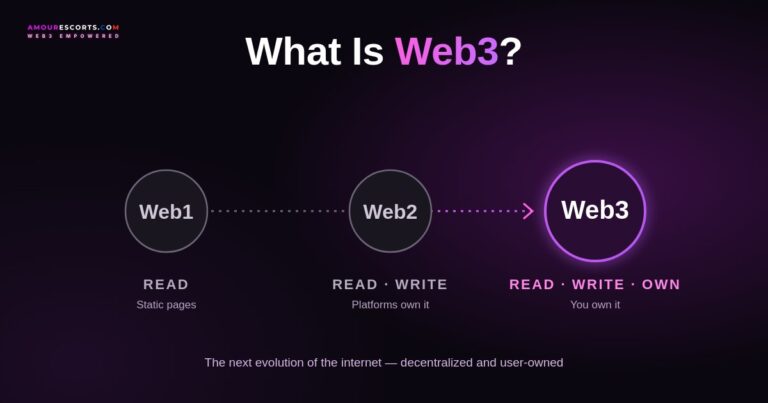
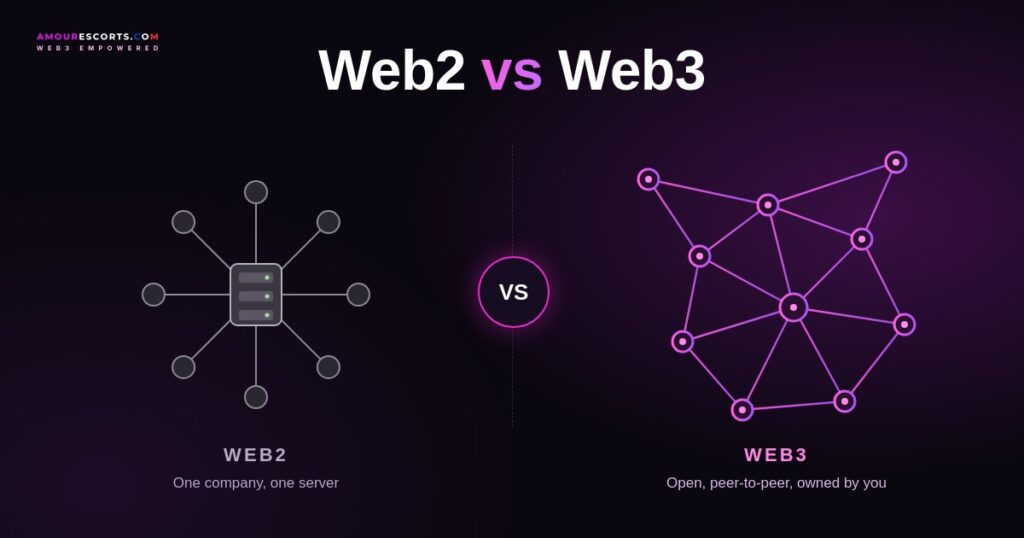
Web2 vs Web3 — what’s the real difference? Most of the internet you use every day is Web2: social networks, marketplaces and apps run by large companies. Web3 is the next step — an internet where people own more of their data, identity and digital assets, and where websites don’t have to depend on a single company’s servers.
This guide puts Web2 and Web3 side by side, explains what really changes, and shows how Amour Escorts uses both: amourescorts.com on the traditional web and Amour.X on the decentralized web.
Web2 vs Web3 at a glance
| Web2 | Web3 | |
|---|---|---|
| Who controls the platform | One company | Open networks no single company controls |
| Where your data lives | On the company’s servers | Spread across blockchain and peer-to-peer networks |
| How you log in | Email and password, or “Sign in with Google” | A crypto wallet that proves who you are |
| Payments | Banks, cards and payment processors | Cryptocurrency sent directly between wallets |
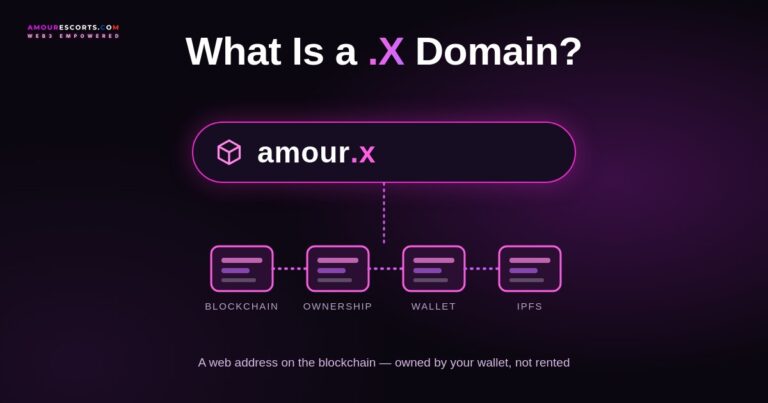
| Web addresses | .com, .net, .org — rented every year | Blockchain domains such as .x — owned by a wallet |
| Who can remove content | The platform, at any time | Much harder for any single party |
| Ease of use | Very easy, works everywhere | Still new; some tools need a Web3 browser like Brave |
What is Web2?
Web2 is the interactive internet that took off in the mid-2000s. Anyone can post, comment and share, but a handful of companies own the platforms that make it possible. They store your data, decide the rules and can change those rules — or close your account — whenever they choose.
Web2 is fast, familiar and convenient. The trade-off is control: you use the platform, but the platform owns the space you use.
What is Web3?
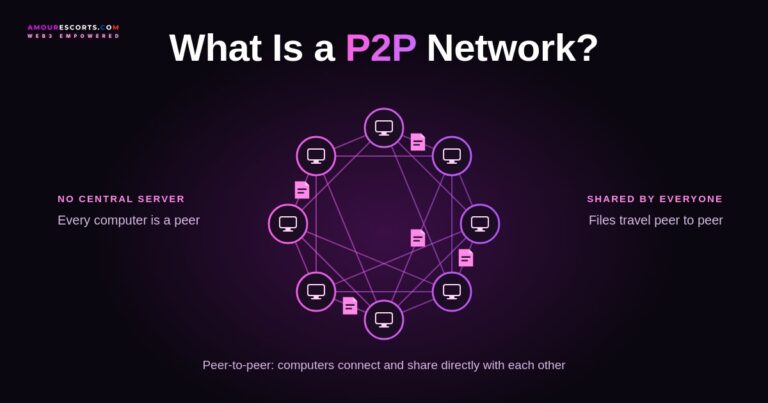
Web3 keeps the interactivity of Web2 but moves key pieces into the hands of users. Blockchains record ownership, crypto wallets replace many logins, and peer-to-peer networks such as IPFS store websites across many computers instead of one. For a broader overview, see Web3 on Wikipedia or read our own guide What is Web3?
Web2 vs Web3: the key differences that matter
1. Ownership
On Web2, you have an account on someone else’s platform. On Web3, you can own things directly — a domain name, a digital asset or the address you use to receive payments — and only your wallet controls them.
2. Privacy
Web2 platforms collect large amounts of personal data in central databases, which become targets for leaks and hacks. Web3 tools can work with far less personal information, because a wallet can prove control without revealing who you are.
3. Payments
Web2 payments pass through banks and processors, which can freeze accounts or refuse whole industries. With Web3, people can send cryptocurrency straight from one wallet to another, without a middleman holding the funds.
4. Resilience
A Web2 site goes offline when its server or host has a problem. A site published to a peer-to-peer network stays available as long as the network holds copies of it.
5. Ease of use
Here Web2 still wins. Web3 asks people to learn about wallets, recovery phrases and new browsers such as Brave, and blockchain transactions can’t be reversed. That’s why many projects, including ours, use Web2 and Web3 together instead of replacing one with the other.
How Amour Escorts uses Web2 and Web3
We run on both, so everyone can choose what suits them:
- amourescorts.com (Web2): our main website. It opens in any browser, and it’s where advertisers create and manage their profiles.
- Amour.X (Web3): our decentralized site, published to a peer-to-peer network and reached through a blockchain .x domain. Amour.X stores no personal account data.
Profiles with the WEB3 VIP plan appear on both. Advertisers can list their own crypto wallet on their profile, and Amour charges advertisers only a monthly subscription — we take no commission and are not involved in any arrangement between advertisers and visitors.
Frequently asked questions
What is the main difference in Web2 vs Web3?
In Web2, companies own the platforms and the data. In Web3, more of that ownership moves to users and to open networks that no single company controls.
Will Web3 replace Web2?
Not anytime soon. Most people still rely on Web2 every day, and Web3 tools are still maturing. For now, the two work best side by side.
Is Web3 safer than Web2?
It can be more private and harder to censor, but it also puts more responsibility on you. Protect your wallet, never share your recovery phrase, and remember that blockchain transactions can’t be undone.
Do I need Web3 to use Amour Escorts?
No. amourescorts.com works in any browser. Amour.X is an extra, decentralized option for those who want it.
How do I open Amour.X?
Use a Web3 browser such as Brave and type amour.x into the address bar.